Beetroot Powder as a Natural Food Colour: Uses, Stability and Formulation Tips
Beetroot powder gives foods a natural red-pink colour. Here's where it performs well, what breaks it down, and how to get a clean result in production.
Legacy Editorial · 30 Jun 2026 · 7 min read
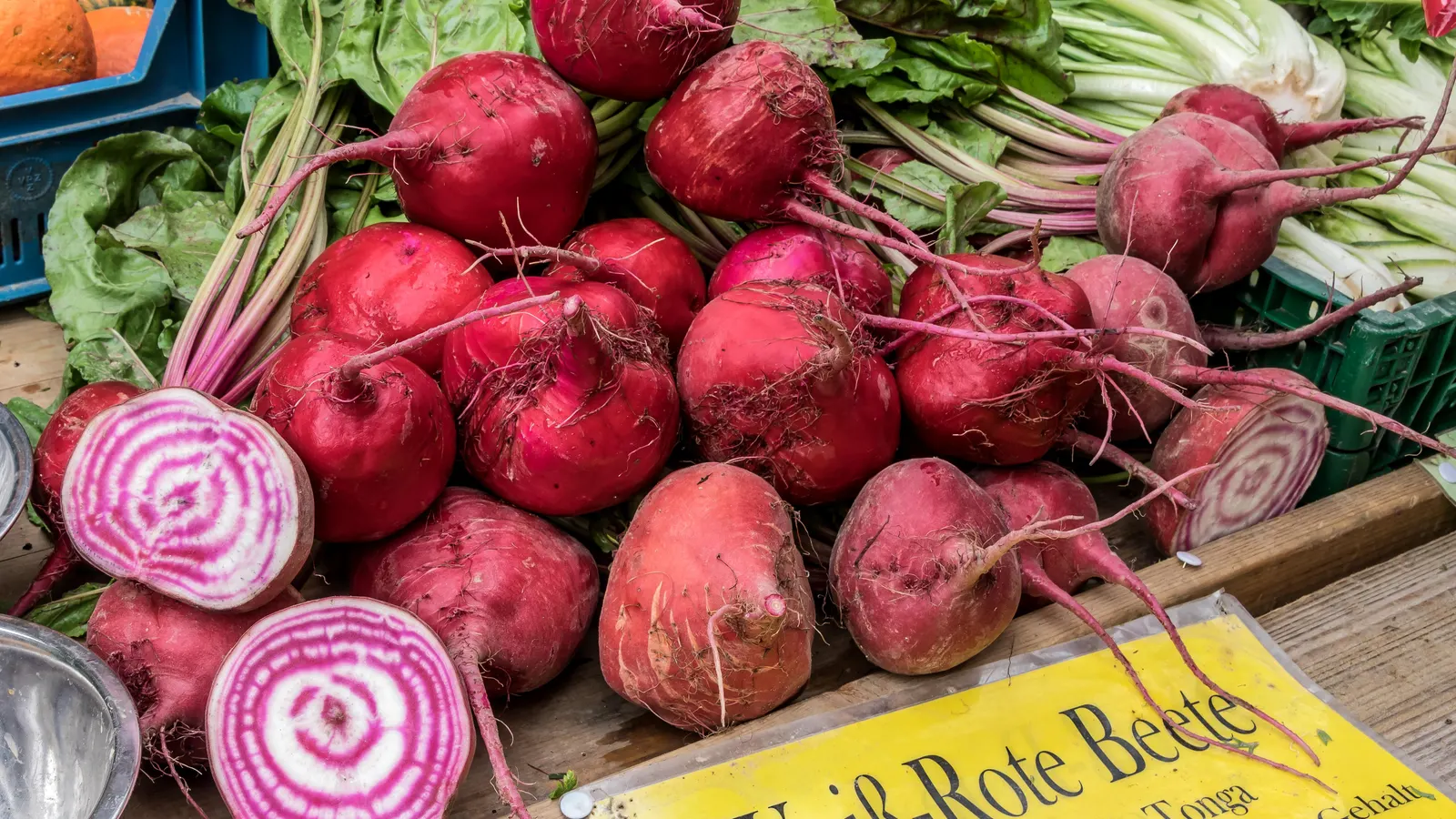
Photo: joergens.mi, CC BY-SA 3.0, cropped

Beetroot powder gives foods a natural red-pink colour from betanin. It works well in dry mixes, frozen desserts, dairy, drinks and minimally heated products. Prolonged high heat, alkaline conditions, light and oxygen can degrade the colour.
Synthetic azo dyes are under sustained regulatory and consumer pressure worldwide — from tightening EU limits to the FDA's 2025 revocation of Red No. 3 authorization in the US. For formulators reformulating away from them, beetroot is usually the first ingredient on the shortlist.
What makes betalains different
Beetroot's red-violet color comes from betalains — specifically betacyanins — a pigment family distinct from the anthocyanins found in berries or purple carrots. Betalains hold their color across a wider pH range than anthocyanins, which is why beetroot red (labelled E162 in the EU) performs so reliably in both acidic products like yogurt drinks and near-neutral applications like sausages and plant-based meat alternatives.
The trade-off is heat sensitivity: betalains degrade faster than synthetic dyes under high-temperature, long-duration processing, so retort-sterilized or extended-shelf-life products need careful process mapping to hold color through the full production run and shelf life.
Where beetroot colour is used today
- Dairy and frozen desserts — yogurts, ice cream, sorbets.
- Confectionery — gummies, hard candy, chocolate coatings.
- Plant-based meat alternatives — where a natural "bleed" or pink hue is part of the sensory expectation.
- Beverages — smoothies, functional drinks, sports nutrition.
Formulation notes for a clean switch
Dosage rate is the first variable to nail down — beetroot powder is far more concentrated than fresh juice, so replacing a synthetic dye is rarely a 1:1 swap and usually needs a short bench trial to match target shade and intensity.
- Standardize on colour value (measured in units per gram) rather than just powder weight, so batches stay visually consistent.
- Protect from light and oxygen in packaging — betalains, like most natural pigments, fade faster under UV exposure.
- Budget for a mild earthy note at higher dosage rates; pairing with fruit acids or flavor maskers keeps it from reading as "beety" in the final product.
- Request a batch-specific Certificate of Analysis — natural pigment strength varies with crop and harvest, unlike synthetic dyes.
Done right, a beetroot-based reformulation gets brands a genuinely clean label without sacrificing the vivid color consumers associate with the category.
Frequently Asked Questions
Does beetroot powder keep its colour when baked?
It can fade or brown with prolonged heat, so test it in your recipe. One supplier guideline warns of degradation with prolonged heating above about 80 to 90 C.
Is beetroot powder the same as E162?
Not exactly. E162 is the regulated colour additive beetroot red. A plain beetroot powder is a food ingredient, so check how your market requires it to be labelled.