Garlic and Onion Powder in Seasoning Blends: A Formulator's Guide
Garlic and onion powder form the savoury base of countless namkeen, soup and ready-to-cook products. Learn how they differ, how they behave and how to keep them flowing.
Legacy Editorial · 31 Oct 2026 · 5 min read
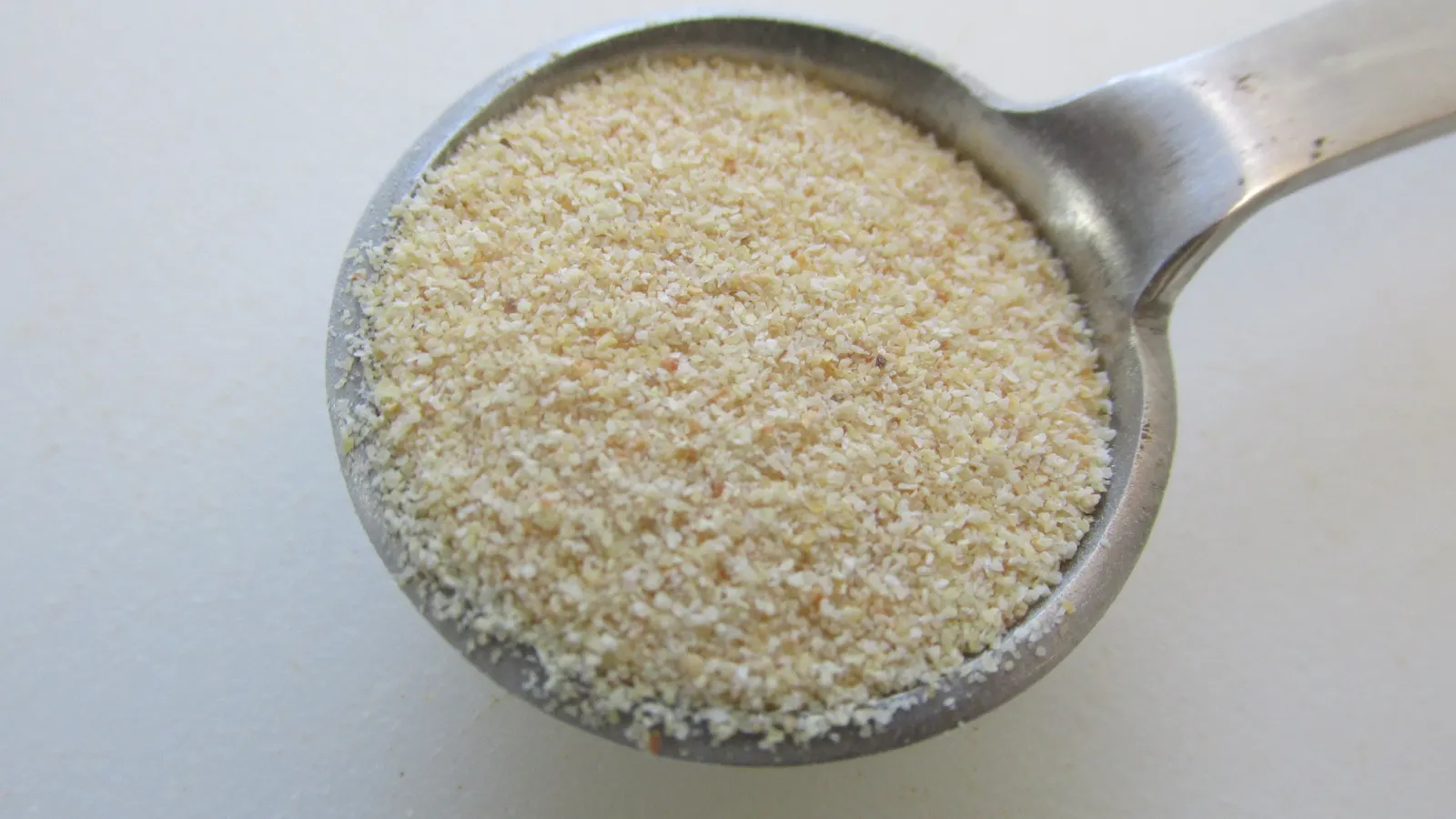
Photo: John Phelan, CC BY-SA 3.0, cropped

Garlic powder adds a sharp pungent top note, while onion powder adds sweetness and body. Together they form the savoury base of namkeen seasonings, instant soups, sauces and ready-to-cook mixes. Both absorb moisture, so dry handling and good sealing prevent caking.
Look at the ingredients of almost any savoury seasoning and you will find garlic powder, onion powder or both. They are inexpensive in use, label-friendly and build the deep savoury base that other flavours sit on. They are also easy to get wrong, because they lump, lose aroma and vary by supplier. Here's how to get better results from them.
What each one contributes
- Garlic powder brings pungency and a sharp, sulphurous top note that lifts a blend.
- Onion powder brings rounded sweetness and body, often supporting the blend rather than standing out.
- Together they create a fuller, more savoury profile than either one alone.
The chemistry behind the flavour
Garlic's sharp aroma forms when the enzyme alliinase meets its precursor, alliin, as the clove is damaged. Careful low-temperature dehydration keeps much of that potential intact, so the flavour develops further when the powder meets moisture. That is why dry garlic powder often smells milder than it tastes in a finished sauce. Strong heat reduces it, so adding it later in cooking retains more bite, while toasting creates a nuttier and mellower flavour.
Onion contains natural sugars, which is why it browns attractively in heat and why powders can darken if stored warm for too long. These sugars also make onion powder especially prone to absorbing moisture and caking.
Where they work best
- Namkeen and snacks: tumble seasoning, usually with salt, spices and an oil or other adhesion system.
- Instant soups and noodles: savoury backbone in dry sachets.
- Sauces, gravies and marinades: quick flavour with less prep labour.
- Ready-to-cook mixes and hotel kitchens: consistent flavour without peeling or chopping.
How to stop caking
- Keep blending rooms dry, and avoid opening bags in humid air for long periods.
- Reseal part-used packs tightly, ideally with the liner twisted closed.
- Allow chilled stock to reach room temperature before opening it, to avoid condensation.
- Blend hygroscopic ingredients with free-flowing ingredients such as salt, and test a permitted anti-caking agent if needed.
- Choose moisture-barrier packaging for finished sachets.
Matching powder to the job
Particle size should fit the process. Finer grades disperse evenly in dry blends and sauces, while coarser granules show up visibly and release flavour more slowly. For seasoning dusts, make sure the particle sizes of your blend are compatible to reduce separation during transport.
Common quality checks
- Pale, even colour with no dark specks or burnt notes.
- A strong, clean aroma when compared with your reference sample.
- Free-flowing texture, without hard lumps.
- A Certificate of Analysis with moisture and microbiological results, especially for no-cook products.
Our garlic and onion powders are available in retail packs and 1 kg and 5 kg bulk packs. Request a sample to compare them in your own seasoning base.
Frequently Asked Questions
Can I use garlic powder instead of fresh garlic?
Yes, in many recipes. Flavour differs, so start with a small amount, and add it later in cooking if you want more bite.
Why does onion powder go hard?
Onion powder absorbs moisture, which forms bridges between particles. Keep it sealed and away from humidity.