Natural vs Dutch-Process Cocoa Powder: Differences, pH and Best Uses
Natural and Dutch-process cocoa differ in pH, colour and flavour, and that changes how they behave in bakery and drinks. Here's how to choose the right one.
Legacy Editorial · 31 Oct 2026 · 5 min read
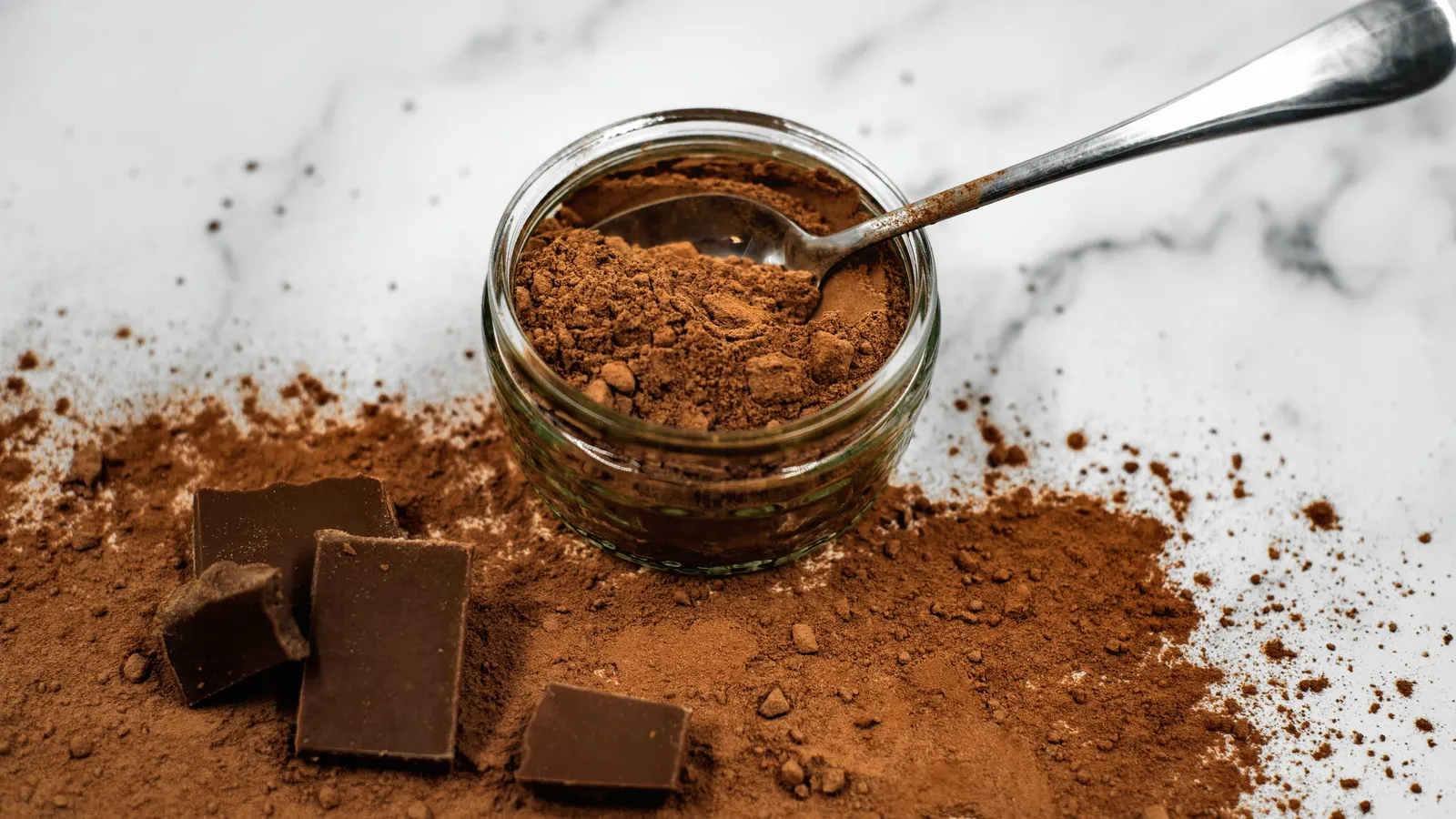
Photo: formulatehealth, CC BY 2.0, cropped

Natural cocoa powder is acidic, at around pH 5 to 6, with a sharper flavour. Dutch-process cocoa is alkalised to around pH 7 to 8, giving a darker colour and smoother taste. Natural cocoa activates baking soda, so the two aren't always interchangeable in baking.
Cocoa powder is what remains after much of the cocoa butter is pressed out of ground cocoa beans. The two main styles are natural and Dutch-process, also called alkalised cocoa. They can look interchangeable on a spec sheet, but they behave differently in a recipe.
What is the difference between natural and Dutch-process cocoa?
- pH: natural cocoa is acidic, at around pH 5 to 6. Alkalising raises Dutch-process cocoa to around pH 7 to 8.
- Colour: natural cocoa is lighter and more reddish-brown. Dutch-process cocoa is usually darker.
- Flavour: natural cocoa tastes sharper and fruitier. Dutch-process cocoa is smoother and less acidic.
- Dispersion: alkalising can help cocoa mix more easily into liquids.
Does the fat content change?
Fat depends on how much cocoa butter is pressed out, not on alkalising. Commercial cocoa powders are often quoted at between 10 and 24% fat. Lower-fat powders contain relatively more starch and can make baked goods drier, so ask for the fat percentage on your spec.
Which cocoa powder should you use?
- Cakes and cookies leavened with baking soda: natural cocoa supplies the acid that the soda needs.
- Recipes with baking powder: either type can work, though colour and flavour will change.
- Chocolate drinks, shakes and sauces: choose by flavour, and check dispersion in your mix.
- Fillings, ice cream and frostings: choose Dutch-process for a dark colour and mellow taste, or natural for sharper chocolate notes.
Can you swap one for the other?
Not always. Replacing natural cocoa with Dutch-process in a soda-leavened recipe removes acid and can reduce the rise, so test the recipe and adjust the leavening. In unleavened products like drinks or sauces, the change mostly affects colour and taste.
What should food manufacturers specify?
- Type, pH and fat percentage.
- Colour reference and flavour profile.
- Particle size or mesh.
- Moisture and microbiological results.
Our cocoa powder is supplied for bakery, confectionery, beverage mixes and breakfast products, in retail and bulk packs. Ask our team for the current specification and a sample for your application.
Frequently Asked Questions
Can I replace natural cocoa with Dutch-process cocoa?
Sometimes. In recipes that rely on baking soda, swapping it may reduce rise. In drinks or sauces, the change mainly affects colour and flavour.
How much fat is in cocoa powder?
Commercial cocoa powders are often quoted at 10 to 24% fat, depending on how much cocoa butter was pressed out.